 Web Application Development
Healthcare Web Development: Building Secure, Scalable, and Patient-Centric Digital Solutions in 2026
Published 23 April 2026
Introduction
The healthcare industry is experiencing a rapid digital transformation. From telemedicine platforms and patient portals to AI-powered diagnostics and healthcare management systems, technology is reshaping how healthcare providers deliver services and engage with patients.
At the center of this transformation is Healthcare Web Development—the process of building secure, scalable, and user-friendly digital platforms specifically designed for healthcare organizations.
Whether you're a hospital, clinic, healthcare startup, or medical service provider, investing in the right healthcare technology can improve patient experiences, streamline operations, and drive long-term growth.
In this guide, we'll explore everything you need to know about healthcare web development, its benefits, key features, industry challenges, and how Markenics helps healthcare organizations build future-ready digital solutions.
What Is Healthcare Web Development?
Healthcare web development involves designing, developing, and maintaining websites and web applications tailored to the healthcare industry.
Unlike standard websites, healthcare platforms must prioritize:
- Data Security
- Regulatory Compliance
- Accessibility
- User Experience
- Scalability
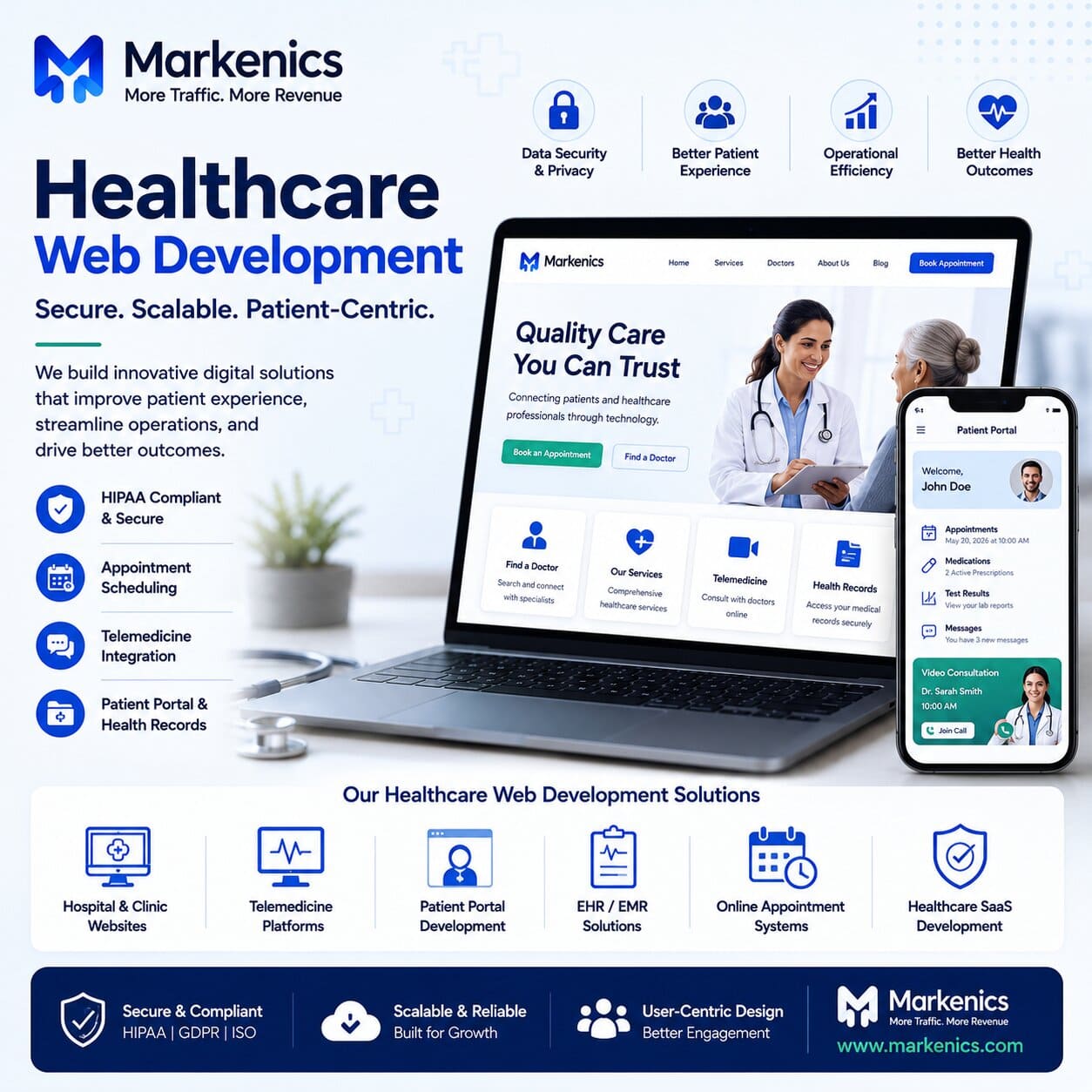
Healthcare web solutions can include:
Common Healthcare Web Applications
- Telemedicine Platforms
- Patient Portals
- Appointment Scheduling Systems
- Electronic Health Record (EHR) Systems
- Healthcare SaaS Platforms
- Hospital Management Systems
- Online Consultation Platforms
- Medical Billing Systems
These solutions help healthcare providers deliver efficient, accessible, and secure services to patients.
Why Healthcare Web Development Matters
Today's patients expect the same seamless digital experiences they receive from banking, e-commerce, and social media platforms.
Healthcare organizations that fail to adapt risk losing patients to more digitally advanced competitors.
1. Improved Patient Experience
Patients can:
- Book Appointments Online
- Access Medical Records
- Receive Test Results
- Communicate with Healthcare Providers
- Manage Prescriptions
This creates a more convenient and satisfying healthcare experience.
2. Enhanced Operational Efficiency
Healthcare web applications automate routine administrative tasks, reducing paperwork and manual processes.
Benefits include:
- Faster Patient Registration
- Automated Appointment Management
- Digital Documentation
- Reduced Human Error
This improves productivity and lowers operational costs.
3. Better Accessibility
Healthcare platforms allow patients to access services anytime and from anywhere.
This is particularly valuable for:
- Rural Communities
- Elderly Patients
- Patients with Mobility Challenges
Digital healthcare removes geographical barriers and expands access to care.
4. Data-Driven Healthcare Decisions
Modern healthcare systems generate valuable patient and operational data.
Advanced analytics help organizations:
- Monitor Performance
- Improve Treatment Outcomes
- Optimize Resources
- Enhance Patient Care
Essential Features of a Healthcare Website or Web Application
Healthcare websites must do much more than simply look professional.
They need to provide secure, reliable, and user-friendly experiences.
HIPAA & GDPR Compliance
Patient data protection is critical.
Healthcare platforms should comply with regulations such as:
- HIPAA (United States)
- GDPR (Europe)
- Local Healthcare Data Protection Laws
Compliance helps protect sensitive patient information and maintain trust.
Secure Patient Portal
A patient portal allows users to:
- Access Health Records
- Download Reports
- View Prescriptions
- Communicate with Doctors
- Manage Appointments
Security and usability are equally important.
Online Appointment Scheduling
Patients increasingly prefer online booking systems.
Benefits include:
- Reduced Administrative Work
- Faster Scheduling
- Improved Patient Convenience
- Automated Reminders
Telemedicine Integration
Virtual healthcare consultations continue growing worldwide.
Telemedicine platforms provide:
- Video Consultations
- Remote Monitoring
- Secure Messaging
- Digital Prescriptions
This improves accessibility while reducing clinic congestion.
Mobile-Friendly Design
Most patients now browse healthcare websites using smartphones.
Responsive design ensures optimal experiences across:
- Mobile Devices
- Tablets
- Desktop Computers
Fast Loading Performance
Website speed directly affects:
- Patient Satisfaction
- Search Engine Rankings
- Conversion Rates
Healthcare websites should be optimized for speed and reliability.
Challenges in Healthcare Web Development
Healthcare development projects are often more complex than traditional web applications.
Data Security & Privacy
Healthcare organizations manage highly sensitive information.
Strong security measures include:
- End-to-End Encryption
- Secure Authentication
- Multi-Factor Authentication
- Regular Security Audits
Regulatory Compliance
Healthcare regulations vary across countries and regions.
Development teams must understand compliance requirements to avoid legal risks.
Legacy System Integration
Many healthcare organizations still use outdated software systems.
Modern web applications must often integrate with:
- EHR Systems
- Billing Platforms
- Medical Databases
- Hospital Management Software
Accessibility for Diverse Users
Healthcare platforms serve users with varying levels of technical experience.
Interfaces should be intuitive and accessible for:
- Elderly Patients
- Healthcare Professionals
- Administrative Staff
Technologies Used in Healthcare Web Development
At Markenics, we use modern technologies to build secure and scalable healthcare platforms.
Frontend Technologies
- React.js
- Next.js
- Vue.js
- TypeScript
Backend Technologies
- Node.js
- Laravel
- Django
- Python
Databases
- PostgreSQL
- MySQL
- MongoDB
Cloud Infrastructure
- AWS
- Microsoft Azure
- Google Cloud
Security Technologies
- SSL Encryption
- OAuth Authentication
- Multi-Factor Authentication
- Role-Based Access Control
These technologies ensure performance, security, and long-term scalability.
SEO for Healthcare Websites
A powerful healthcare platform is ineffective if patients cannot find it online.
Healthcare SEO helps increase visibility and attract qualified traffic.
Keyword Optimization
Target keywords may include:
- Healthcare Web Development
- Healthcare Software Development
- Telemedicine Platform Development
- Medical Website Development
- Healthcare App Development
Strategic keyword placement improves search engine rankings.
Content Marketing
Publishing valuable content helps:
- Educate Patients
- Build Authority
- Increase Organic Traffic
Popular content types include:
- Health Guides
- Medical Articles
- Healthcare Technology Blogs
- Patient Resources
Technical SEO
Healthcare websites should prioritize:
- Fast Loading Speed
- Mobile Optimization
- Structured Data
- Secure HTTPS Connections
These factors improve both rankings and user experience.
Local SEO
For clinics and hospitals, local search visibility is essential.
Local SEO helps organizations appear in:
- Google Maps
- Local Search Results
- "Near Me" Searches
Healthcare Web Development Trends in 2026
Healthcare technology continues evolving rapidly.
Artificial Intelligence (AI)
AI is transforming healthcare through:
- Virtual Assistants
- Diagnostic Support Tools
- Predictive Analytics
- Patient Engagement Solutions
Telemedicine Expansion
Remote healthcare services continue growing globally.
Patients increasingly prefer virtual consultations for convenience and accessibility.
Wearable Device Integration
Healthcare applications now connect with:
- Smartwatches
- Fitness Trackers
- Health Monitoring Devices
This enables real-time health tracking and personalized care.
Blockchain for Healthcare Security
Blockchain technology offers:
- Secure Medical Records
- Improved Transparency
- Enhanced Data Integrity
Voice Search Optimization
Patients are increasingly using voice assistants to search for healthcare providers and services.
Healthcare websites should optimize for conversational search queries.
How to Choose the Right Healthcare Web Development Partner
Selecting the right development company is critical to project success.
Industry Experience
Choose a team with healthcare-specific expertise.
Healthcare development requires specialized knowledge that general web developers may lack.
Security Expertise
Your development partner should prioritize:
- Data Protection
- Compliance
- Risk Management
Portfolio & Case Studies
Review previous healthcare projects to evaluate experience and technical capabilities.
Scalability
Your platform should support future growth, new features, and increasing user demand.
Long-Term Support
Healthcare systems require continuous updates, maintenance, and security monitoring.
Choose a partner committed to ongoing support.
Why Choose Markenics for Healthcare Web Development?
At Markenics, we develop healthcare solutions that combine innovation, security, and exceptional user experiences.
Our Healthcare Development Services Include:
- Healthcare Website Development
- Patient Portal Development
- Telemedicine Solutions
- Healthcare SaaS Platforms
- Appointment Booking Systems
- Healthcare CRM Solutions
- Healthcare Mobile App Development
- Ongoing Maintenance & Support
Why Healthcare Organizations Choose Markenics
- Industry-Focused Expertise
- Secure & Compliant Development
- Scalable Architecture
- Modern Technology Stack
- SEO-Friendly Solutions
- Patient-Centered Design
Our mission is to help healthcare organizations improve patient care through innovative digital solutions.
Conclusion
Healthcare web development is no longer optional—it is essential for organizations that want to remain competitive in an increasingly digital world.
From improving patient experiences and streamlining operations to enhancing accessibility and security, healthcare web applications play a vital role in modern healthcare delivery.
By investing in the right technology and partnering with an experienced development team like Markenics, healthcare organizations can build scalable, secure, and future-ready digital platforms that drive better outcomes for both patients and providers.
The future of healthcare is digital, and the time to invest is now.
Quick Summary
✔ Healthcare web development focuses on secure, compliant digital healthcare platforms.
✔ Key solutions include patient portals, telemedicine systems, appointment booking platforms, and healthcare SaaS applications.
✔ Security, compliance, scalability, and user experience are critical factors.
✔ SEO helps healthcare organizations improve visibility and attract patients online.
✔ Emerging technologies like AI, blockchain, and wearable integrations are shaping the future of healthcare technology.
✔ Choosing the right development partner is essential for long-term success.
Frequently Asked Questions (FAQs)
What Is Healthcare Web Development?
Healthcare web development involves building websites and web applications specifically designed for healthcare organizations, clinics, hospitals, and medical service providers.
Why Is Security Important in Healthcare Development?
Healthcare platforms handle sensitive patient information, making security and compliance essential for protecting data and maintaining trust.
What Features Should a Healthcare Website Include?
Important features include patient portals, appointment scheduling, telemedicine integration, secure communication, and mobile responsiveness.
How Long Does Healthcare Web Development Take?
Project timelines vary depending on complexity, but most healthcare web applications require 2–6 months for development.
Can Healthcare Websites Rank on Google?
Yes. With proper SEO optimization, healthcare websites can attract organic traffic and improve online visibility.
Why Choose Markenics?
Markenics combines healthcare industry knowledge, modern technologies, and security-first development practices to create scalable healthcare solutions that improve patient experiences and support business growth.