 Web Application Development
Landing Page vs Website: Which One Does Your Business Need in 2026?
Published 06 May 2026
Introduction
In today's competitive digital landscape, having an online presence is no longer optional—it's essential. However, many business owners struggle with an important question:
Should I invest in a landing page or a full website?
While both are powerful digital marketing tools, they serve different purposes and deliver different results. Choosing the right option can significantly impact your lead generation, conversion rates, search engine visibility, and overall business growth.
In this guide, we'll break down the key differences between landing pages and websites, explain when to use each, and help you determine the best solution for your business.
What Is a Landing Page?
A landing page is a standalone web page designed with a single goal in mind: conversion.
Unlike a traditional website, a landing page removes distractions and encourages visitors to take one specific action.
Common Landing Page Goals
- Request a Free Consultation
- Download an Ebook
- Register for a Webinar
- Purchase a Product
- Submit a Lead Form
- Book an Appointment
Key Elements of a High-Converting Landing Page
- Attention-Grabbing Headline
- Clear Value Proposition
- Engaging Visuals
- Customer Testimonials
- Lead Capture Form
- Strong Call-to-Action (CTA)
The purpose of a landing page is simple:
Convert visitors into leads or customers as efficiently as possible.
What Is a Website?
A website is a collection of interconnected pages that provide comprehensive information about a business, brand, products, or services.
Unlike landing pages, websites are designed to educate, inform, and build credibility over time.
Typical Website Pages Include
- Home Page
- About Us
- Services
- Portfolio
- Blog
- Contact Page
- FAQs
- Case Studies
A website acts as the central hub of your online presence and serves multiple business objectives simultaneously.
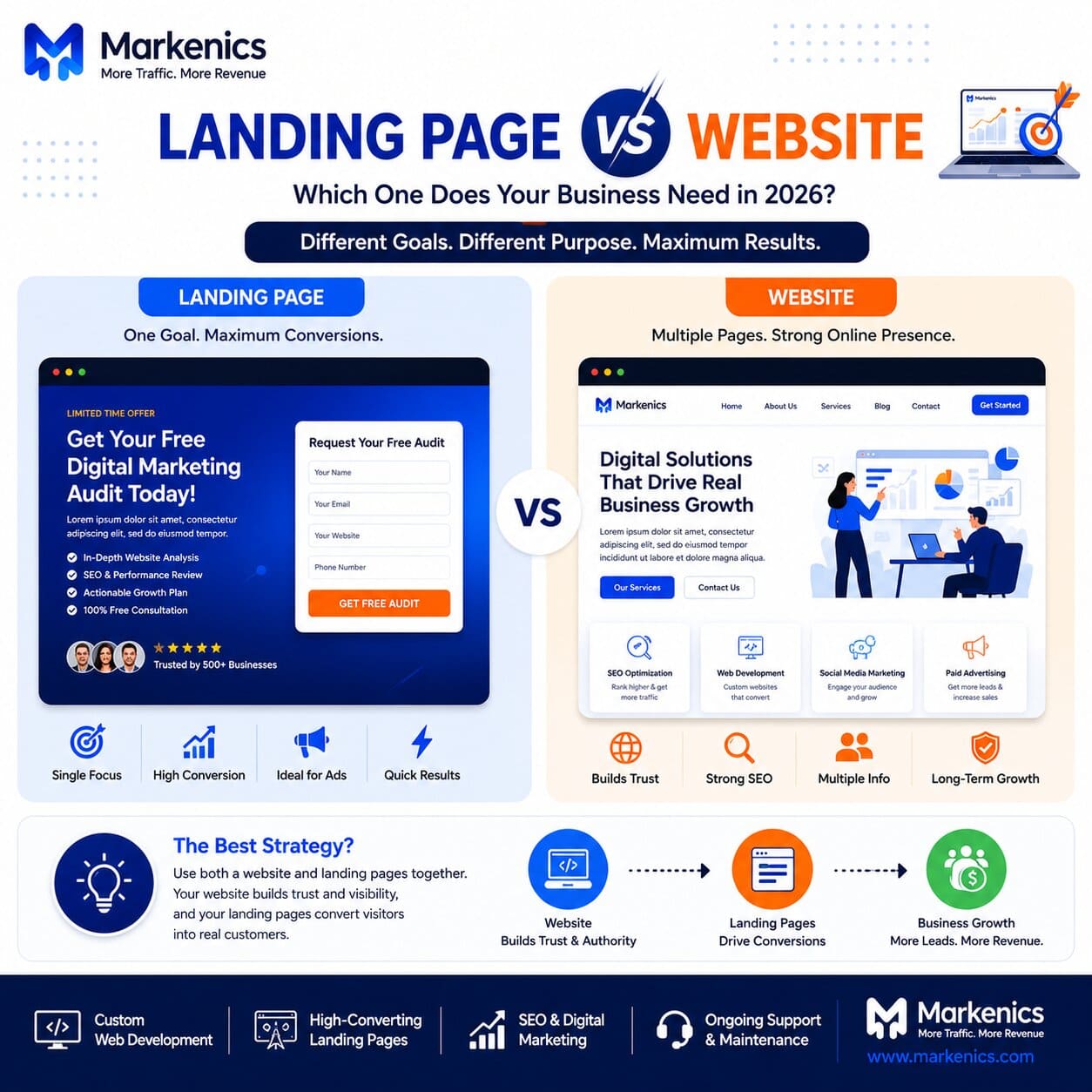
Landing Page vs Website: Key Differences
| Feature | Landing Page | Website |
|---|---|---|
| Purpose | Single Conversion Goal | Multiple Business Goals |
| Navigation | Minimal or None | Full Navigation Menu |
| Number of Pages | One Page | Multiple Pages |
| Conversion Focus | Very High | Moderate |
| SEO Potential | Limited | Strong Long-Term SEO |
| User Journey | One Action | Multiple Exploration Paths |
| Best For | Ads & Campaigns | Branding & Growth |
| Content Style | Focused & Direct | Informative & Detailed |
When Should You Use a Landing Page?
Landing pages are most effective when you want visitors to take one specific action.
1. Paid Advertising Campaigns
Whether you're running:
- Google Ads
- Facebook Ads
- Instagram Ads
- LinkedIn Ads
A dedicated landing page usually generates higher conversion rates than sending visitors to your homepage.
Example
Instead of directing visitors to your website's homepage, send them to a landing page offering:
"Free Digital Marketing Audit"
This creates a focused experience and increases conversions.
2. Lead Generation Campaigns
Landing pages are excellent for collecting:
- Email Addresses
- Phone Numbers
- Appointment Requests
- Consultation Bookings
Many businesses use landing pages as a primary lead generation tool.
3. Product Launches & Promotions
Launching:
- New Services
- Special Discounts
- Seasonal Offers
- Limited-Time Promotions
A landing page creates urgency and improves campaign performance.
4. Marketing Testing
Landing pages make it easier to test:
- Headlines
- Images
- CTA Buttons
- Pricing Models
- Offers
This allows businesses to optimize campaigns based on real data.
When Should You Use a Website?
A website is essential for businesses focused on long-term growth and brand credibility.
1. Building Trust & Authority
Customers often visit a website to learn more about your business.
They want to know:
- Who you are
- What you do
- Your experience
- Your client success stories
A professional website builds confidence and trust.
2. Improving Search Engine Rankings
If you want to generate organic traffic from Google, a website is critical.
Websites support:
- Blogging
- SEO Optimization
- Internal Linking
- Keyword Targeting
- Content Marketing
This helps increase visibility and drive consistent traffic over time.
3. Showcasing Multiple Services
Businesses offering multiple services need a website to organize information effectively.
For example, Markenics offers:
- SEO Services
- Web Development
- Social Media Marketing
- Branding & Design
- Content Marketing
- Paid Advertising
A website allows visitors to explore these services easily.
4. Enhancing User Experience
Websites allow users to:
- Browse Content
- Read Blogs
- View Case Studies
- Explore Portfolios
- Contact Your Team
This creates a complete customer journey.
Which Converts Better: Landing Page or Website?
In most cases, landing pages generate higher conversion rates.
Why?
Because they remove distractions.
Visitors focus on one action, such as:
- Filling Out a Form
- Booking a Consultation
- Downloading a Resource
- Making a Purchase
Websites offer multiple pathways, which can sometimes reduce conversions.
Winner for Conversions:
✅ Landing Page
Winner for Long-Term Growth:
✅ Website
Do Businesses Need Both?
Absolutely.
The most successful businesses use both websites and landing pages together.
How They Work Together
Your Website Builds Trust
Your website helps visitors:
- Learn About Your Business
- Explore Services
- Read Reviews
- Understand Your Expertise
Your Landing Pages Drive Conversions
Landing pages help convert traffic from:
- Paid Ads
- Email Campaigns
- Social Media Promotions
- Product Launches
Together, they create a complete digital marketing system.
Landing Page vs Website for SEO
This is one of the most common questions businesses ask.
Which Is Better for SEO?
A website is significantly better for long-term SEO success.
Websites support:
- Blog Content
- Keyword Optimization
- Internal Linking
- Technical SEO
- Content Clusters
- Domain Authority Growth
Search engines reward websites that consistently publish valuable content.
Can Landing Pages Rank on Google?
Yes.
Optimized landing pages can rank for:
- Local Service Keywords
- Product-Specific Searches
- Promotional Campaign Terms
However, they generally don't provide the same SEO value as a full website.
Common Mistakes Businesses Make
Using the Homepage as a Landing Page
Homepages often contain:
- Multiple Navigation Links
- Various CTAs
- Too Much Information
Dedicated landing pages usually perform better for campaigns.
Relying Only on Landing Pages
Without a website, businesses may struggle with:
- Trust Building
- SEO Visibility
- Brand Authority
- Customer Education
Creating Overcomplicated Landing Pages
Too many elements can reduce conversion rates.
The best landing pages are:
- Simple
- Focused
- Easy to Navigate
- Conversion-Oriented
How to Choose the Right Solution
Choose a Landing Page If:
- You Need Quick Leads
- You Run Paid Advertising
- You Promote Specific Offers
- You Want Higher Conversion Rates
Choose a Website If:
- You Need Long-Term SEO Growth
- You Offer Multiple Services
- You Want to Build Trust
- You Need a Professional Online Presence
Best Option?
Use Both.
A website builds authority.
A landing page generates conversions.
Together, they maximize your marketing results.
Why Markenics Recommends Both
At Markenics, we help businesses create high-converting landing pages and professional websites that work together to drive measurable growth.
Our services include:
- Landing Page Design
- Website Development
- Conversion Rate Optimization
- SEO Services
- Google Ads Management
- Marketing Automation
Our goal is to help businesses generate more leads, more traffic, and more revenue.
Conclusion
There is no single winner in the landing page vs website debate because both serve different purposes.
Landing pages are designed for conversion-focused campaigns.
Websites are built for branding, SEO, credibility, and long-term growth.
Businesses that use both strategically often achieve the best results.
Your website attracts and educates visitors.
Your landing pages convert them into customers.
If you're serious about growing your business online in 2026, combining both is the smartest digital strategy.
Frequently Asked Questions (FAQs)
What is the difference between a landing page and a website?
A landing page focuses on a single conversion goal, while a website contains multiple pages designed to inform visitors and support broader business objectives.
Which is better for SEO?
A website is better for SEO because it supports content marketing, keyword optimization, internal linking, and long-term organic traffic growth.
Do landing pages convert better than websites?
Yes. Landing pages generally have higher conversion rates because they eliminate distractions and focus visitors on one action.
Can a business use a landing page without a website?
Yes, but it is not ideal for long-term growth. A website helps build trust, authority, and search engine visibility.
Should small businesses have both?
Absolutely. A website establishes credibility, while landing pages help generate leads and sales.
Why are landing pages important for advertising campaigns?
Landing pages improve campaign performance by matching the ad message and guiding visitors toward a specific conversion goal.
How many landing pages should a business have?
Businesses can create multiple landing pages for different services, products, campaigns, or target audiences.
Why Choose Markenics?
Markenics specializes in creating high-performance websites and conversion-focused landing pages that help businesses attract visitors, generate leads, and increase revenue.